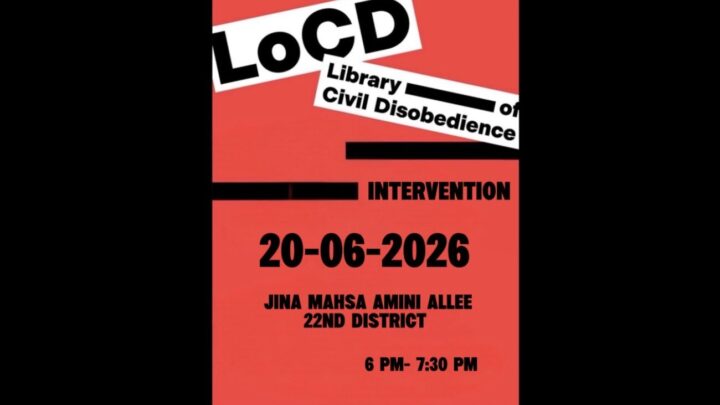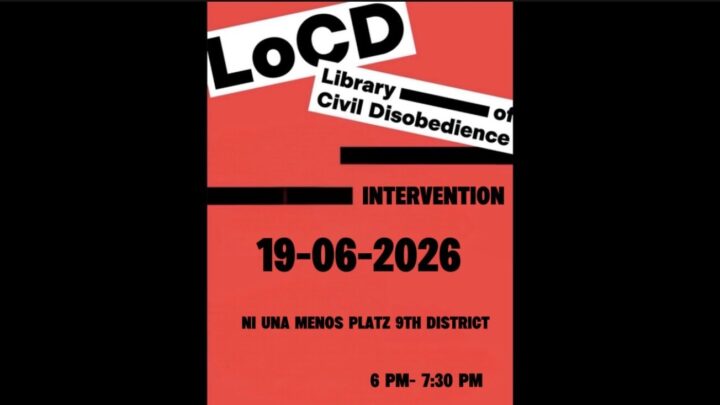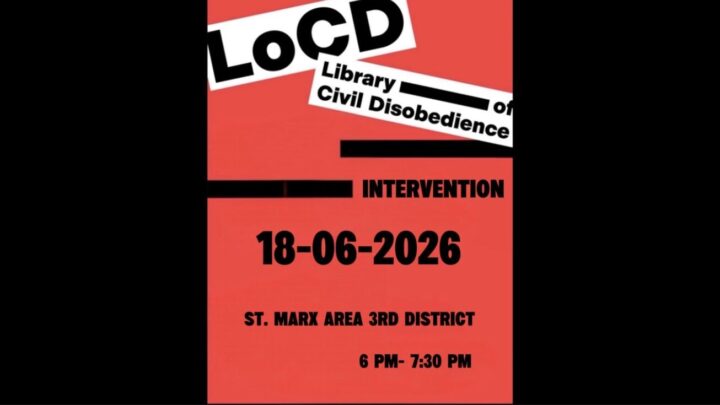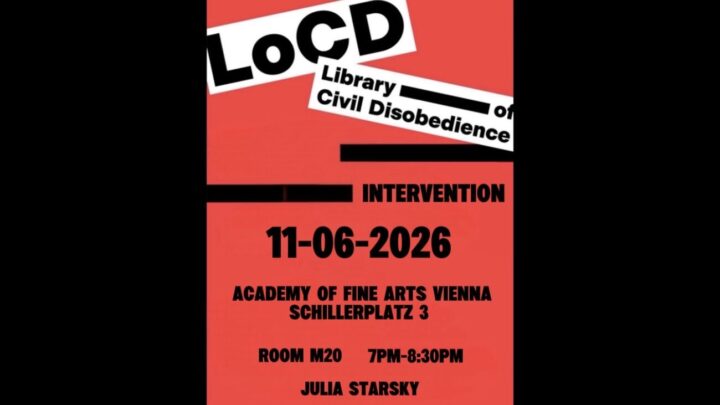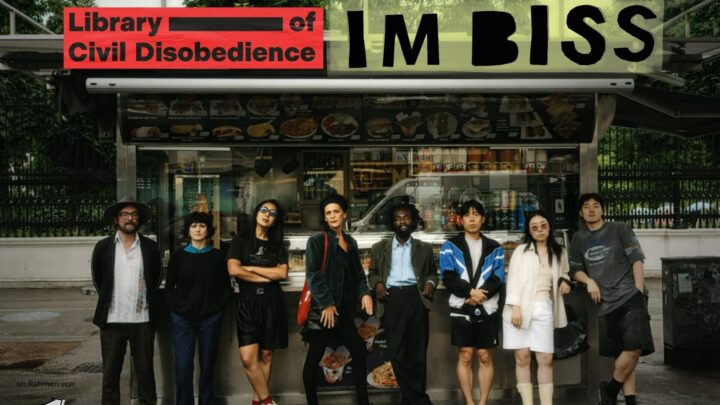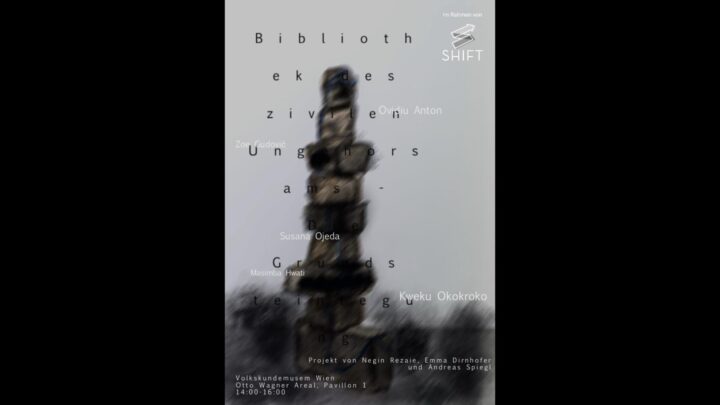
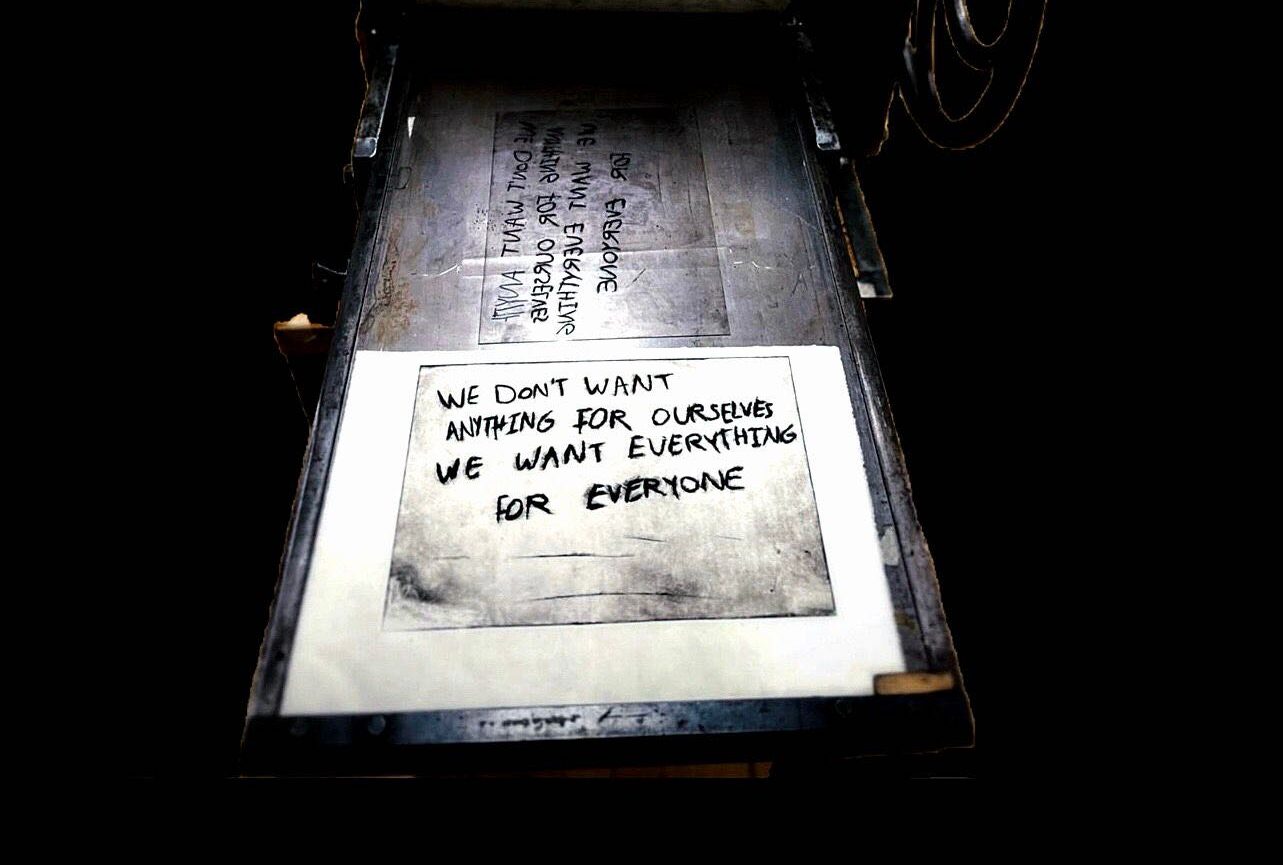
Die Geschichte der Demokratie ist untrennbar mit einer Geschichte des zivilen Ungehorsams verbunden. Die Entwicklung des Rechts und Rechtmäßigen steht mit jedem Schritt vor der Frage nach der Gerechtigkeit. Der zivile Ungehorsam meldet sich genau in diesem Zwischenraum aus Recht und Gerechtigkeit zu Wort, um manchmal unrechtmäßig erscheinenden Lebensformen Recht zu verleihen und ein andermal die Ungerechtigkeit eines Rechts sichtbar zu machen. Die Bibliothek des zivilen Ungehorsams oder Library of Civil Disobedience (LoCD) verfolgt das Ziel, eine künstlerische Forschungsplattform zum zivilen Ungehorsam und zu verschiedenen Formen des politischen und künstlerischen Widerstands aufzubauen und den entsprechenden (schon vorhandenen oder entstehenden) Archiven Raum zu geben. Performances von Künstler*innen und Aktivist*innen an verschiedenen Orten in Wien werden die Grenzen zwischen dem Legalen und Illegalen aber trotzdem Legitimen künstlerisch ausloten.
***
The history of democracy is inextricably linked to a history of civil disobedience. The development of law and legality is faced with the question of justice at every step. Civil disobedience makes its voice heard precisely in this interstice of law and justice, sometimes to lend justice to seemingly unlawful ways of life and at other times to make the injustice of a law visible. The Library of Civil Disobedience (LoCD) aims to establish an artistic research platform on civil disobedience and various forms of political and artistic resistance and to provide space for the corresponding (existing or emerging) archives. Performances by artists and activists at various locations in Vienna will artistically explore the boundaries between the legal and illegal that nevertheless appears to be legitimate.